About the Museum
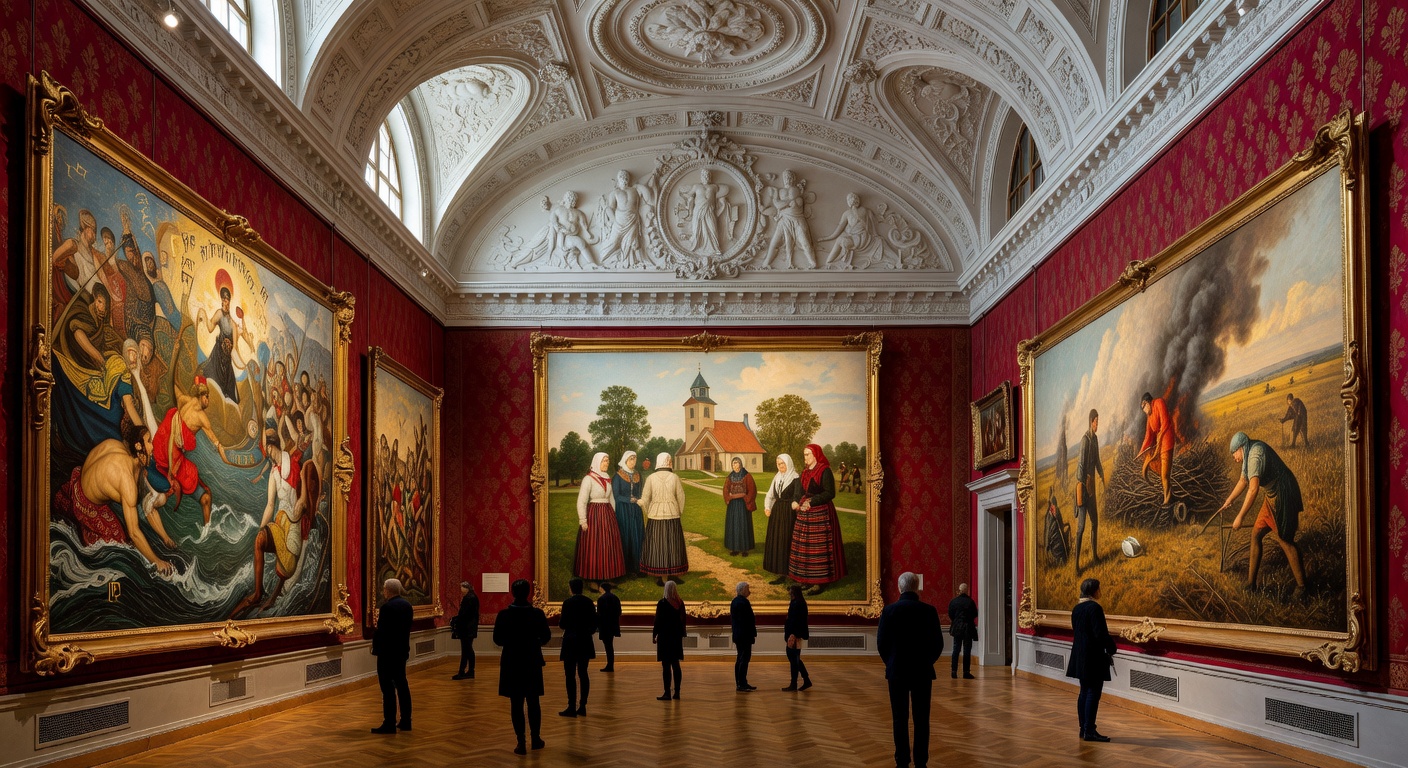
The Ateneum Art Museum is Finland's most famous and beloved art museum, and one of the most significant cultural landmarks in all of Scandinavia. Located in the heart of Helsinki, directly across from the Central Railway Station, the Ateneum houses the largest collection of classical art in Finland.
The museum building, designed by Theodor Höijer, was completed in 1887 and represents a stunning example of Neo-Renaissance architecture. Its grand facade features medallions depicting the great masters — Raphael, Phidias, and Bramante — setting the tone for the artistic treasures within.
The collection spans from the 1750s to the 1960s, featuring over 20,000 works of art including paintings, sculptures, drawings, and prints. Visitors can admire masterpieces by Finland's most celebrated artists, including Akseli Gallen-Kallela, Helene Schjerfbeck, Albert Edelfelt, and Hugo Simberg.
Collection Highlights
- Akseli Gallen-Kallela's Aino Triptych — An iconic depiction from the Finnish national epic Kalevala
- Helene Schjerfbeck's Self-Portraits — A powerful series spanning decades of the artist's life
- Albert Edelfelt's works — Stunning Finnish landscapes and historical scenes
- Hugo Simberg's The Wounded Angel — Voted Finland's national painting in 2006
- International collection — Works by Cézanne, Chagall, van Gogh, Modigliani and more
History
The Finnish Art Society began collecting art in the 1840s, and by the 1880s, the growing collection demanded a proper home. The Ateneum building was inaugurated in 1887, originally serving as a combined art school, museum, and design institution. Over the decades, the museum has undergone several renovations while preserving its magnificent 19th-century character.
Today, the Ateneum is part of the Finnish National Gallery, alongside Kiasma and the Sinebrychoff Art Museum, forming the backbone of Finland's public art collections.