About the Museum
The National Museum of Finland (Suomen kansallismuseo) is the country's premier historical museum, offering a comprehensive journey through Finnish history from the Stone Age to the present day. Housed in a majestic National Romantic style castle completed in 1910, the museum is an architectural treasure in its own right.
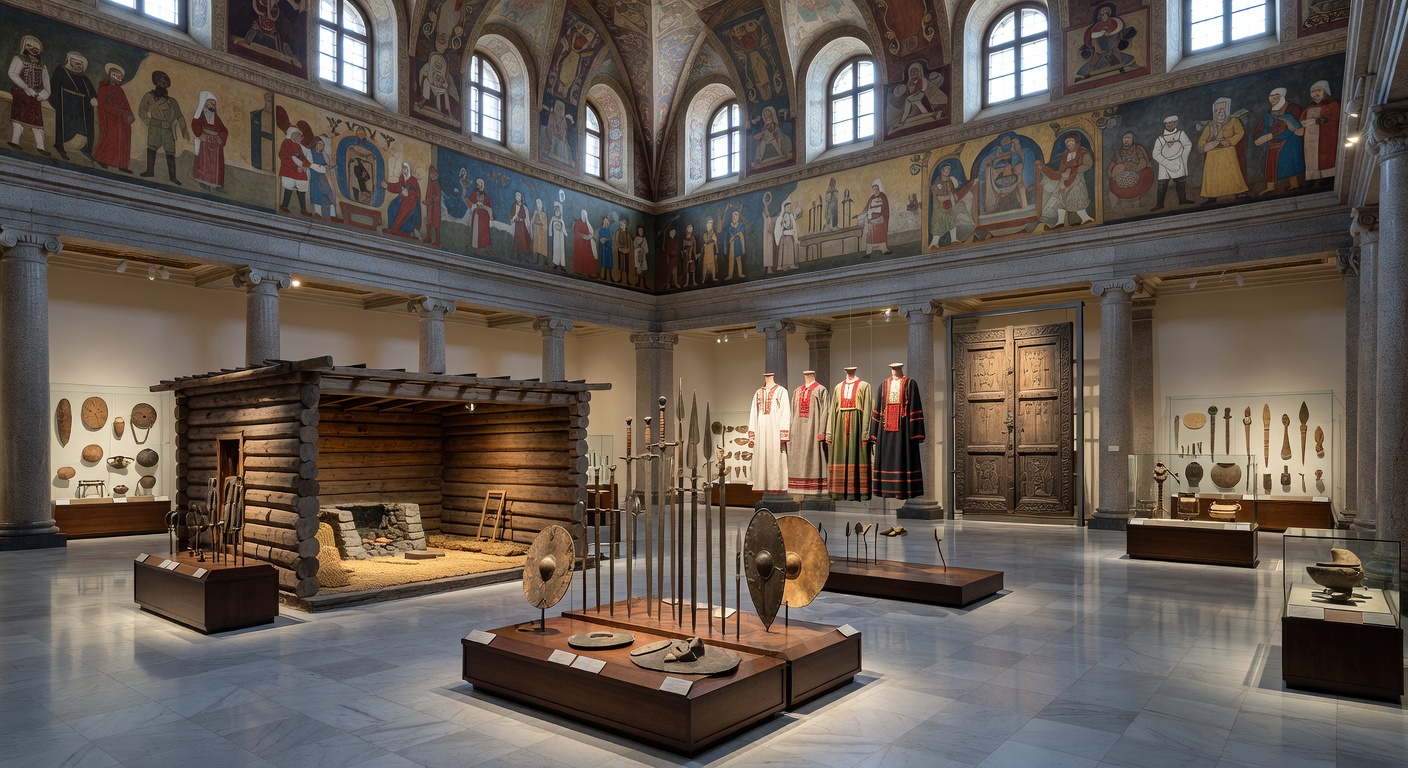
The building was designed by architect trio Herman Gesellius, Armas Lindgren, and Eliel Saarinen — the same visionaries behind many of Finland's most iconic early 20th-century buildings. The entrance hall features stunning ceiling frescoes by Akseli Gallen-Kallela depicting scenes from the Kalevala.
The permanent exhibitions take visitors on a chronological journey through Finnish culture, covering prehistoric finds, medieval church art, the era of Swedish and Russian rule, and Finland's path to independence and modern nationhood.
Collection Highlights
- Prehistoric Finland — Stone Age tools, Bronze Age artifacts, and Iron Age treasures
- Treasure Trove — Medieval coins, jewelry, and precious objects
- A Realm — Finland under Swedish and Russian rule
- Land and People — Traditional Finnish life and folk culture
- The Workshop — Interactive exhibition for families and children
Architecture
The National Romantic style building draws inspiration from medieval churches and castles, with a distinctive stone tower, granite walls, and ornamental details inspired by Finnish nature and folklore. A major renovation completed in 2017 added modern exhibition spaces while preserving the building's historic character.